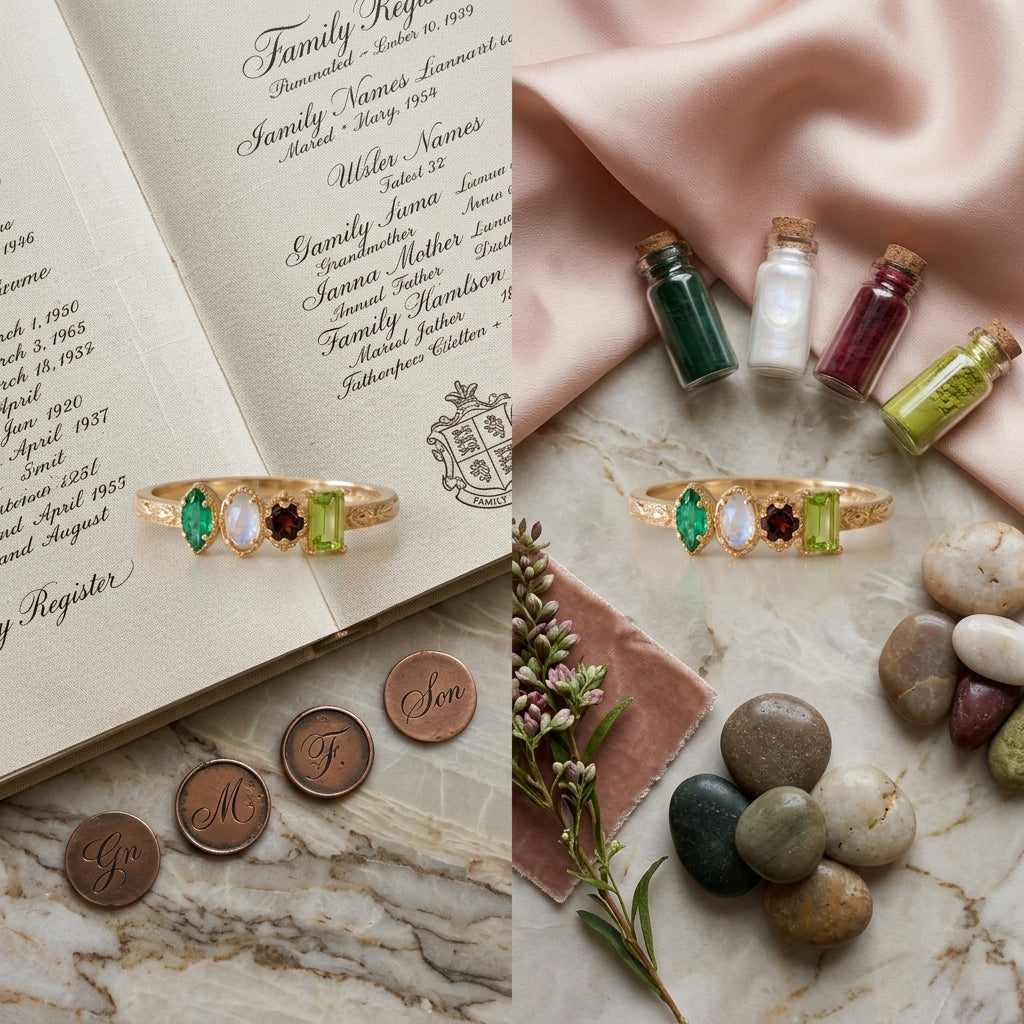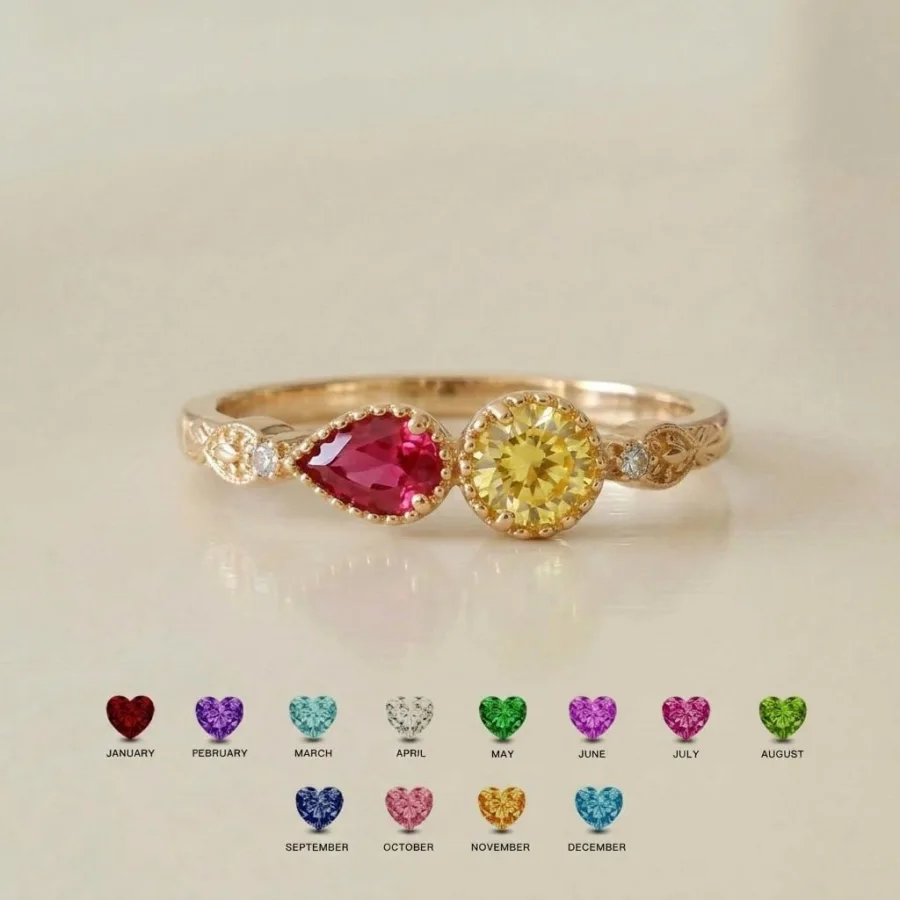
FarahBlush Journal · Family Birthstones
Birth order, meaning, or color? The best sequence is the one you can still understand years from now.
A planning guide for personalized family rings with more than one stone.
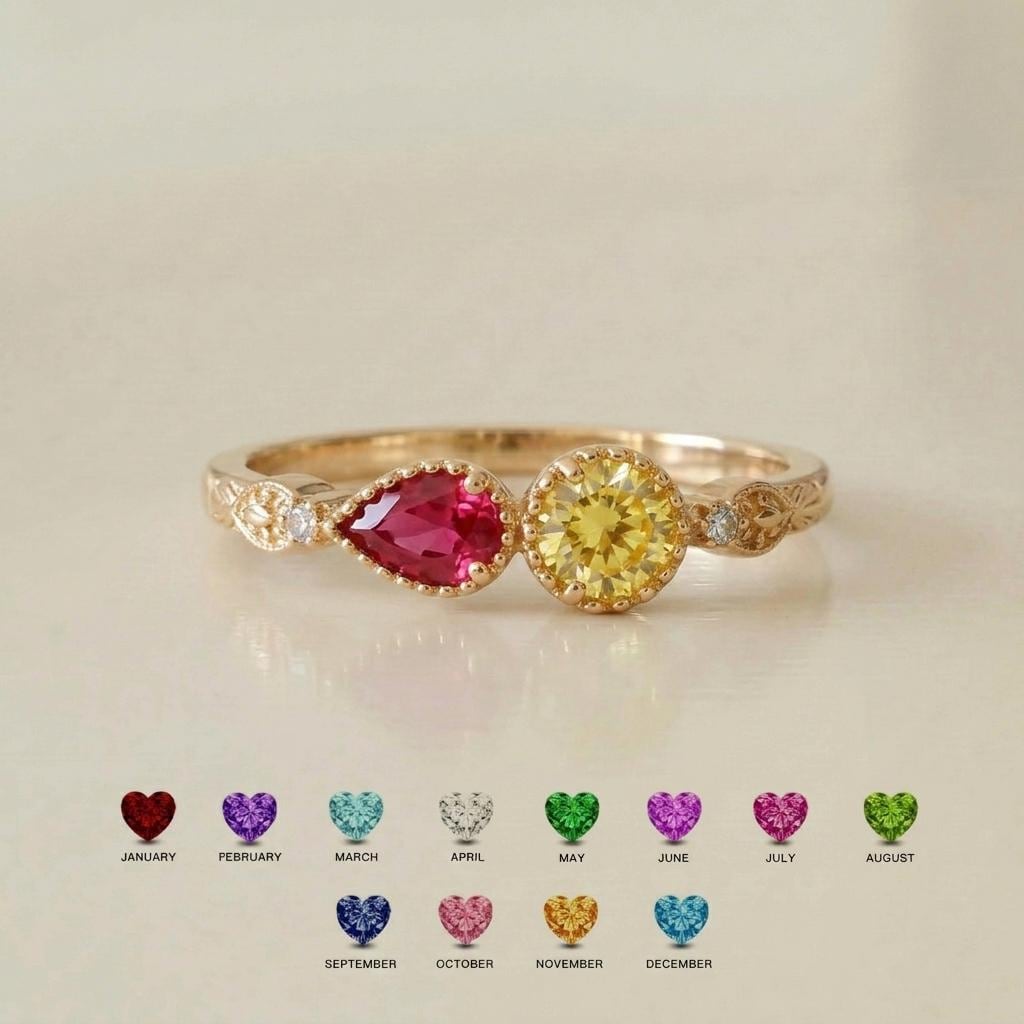
“Choose the people first. Then give every stone a place you can remember.”
Begin With the Story
There Is No Universal “Correct” Family Order
A family ring is personal before it is decorative. The stones might represent children, a partner and children, grandchildren, or several generations at once. That means the sequence should begin with the people the ring is meant to hold—not with a rule that every family has to follow.
Three systems are especially useful: birth order, meaning-first placement, and visual color flow. Each can work beautifully. The important part is to choose one intentionally and keep a written map of who belongs to each position before you submit the personalization.
Same Family · Three Ways to Arrange
Oldest to Youngest
A chronological system that is simple to explain and easy to document.
Place the Story Intentionally
Useful when one position has special emotional significance in the design.
Let the Palette Move
A visual approach—provided you still record exactly which person is assigned to each position.
Method 01
Birth Order: The Clearest Family Timeline
Birth order works well when the stones represent children or grandchildren and you want the sequence to read like a simple family timeline. Start with the oldest person represented and continue to the youngest. If parents are included too, decide in advance whether they come before the children or whether the ring is meant to represent the children only.
The advantage is clarity. Months can repeat and colors can vary dramatically, but the sequence still has a stable rule behind it.
Best for: families who want an order that is easy to remember without relying on the visual color pattern.
Method 02
Meaning First: When Position Carries Part of the Story
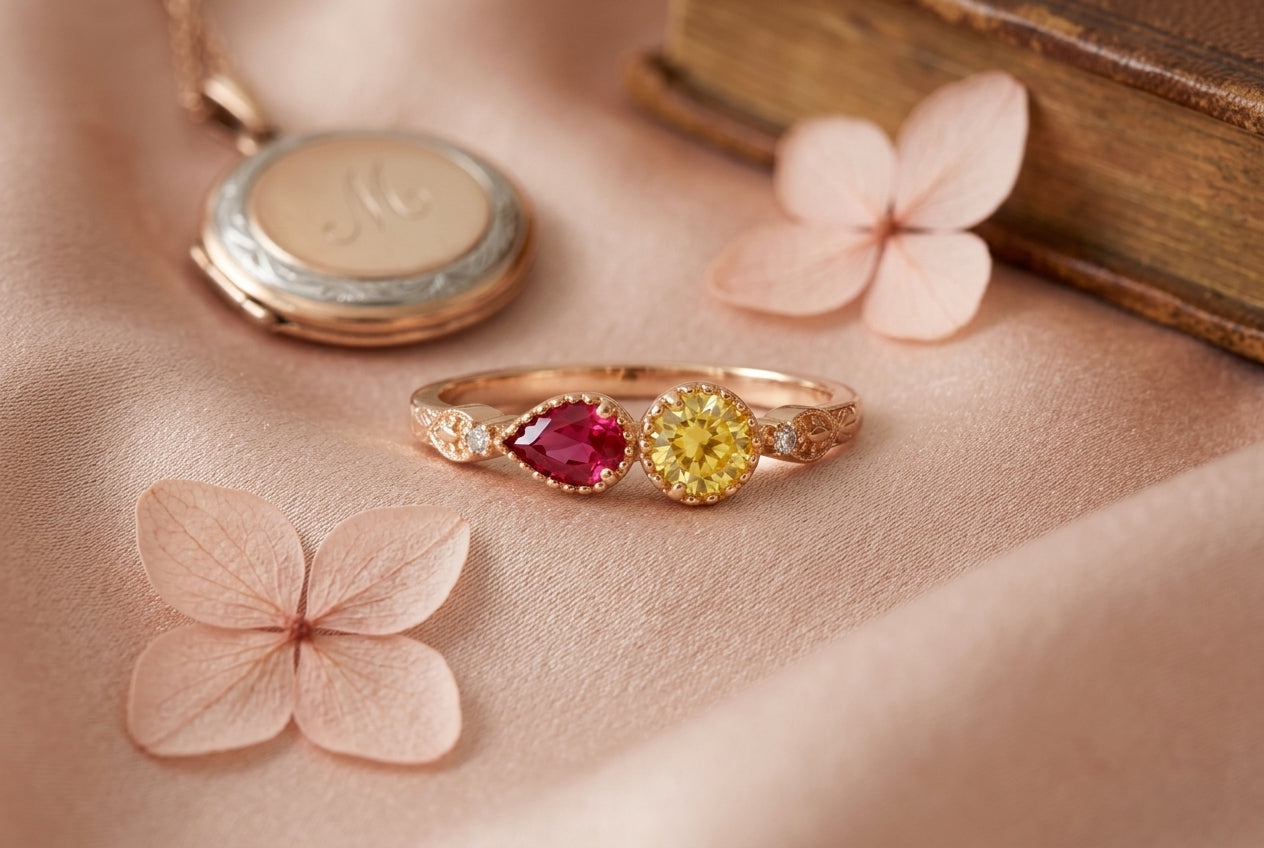
Sometimes a design naturally draws the eye to one stone or one area of the ring. If that position feels important to you, you can build the family map around meaning rather than age. A partner might be placed first, a central child might occupy a focal position, or two people might be intentionally paired.
This method requires more careful documentation because the order is personal rather than chronological. Write the mapping before you order: Position 1 = person, Position 2 = person, and continue until every stone has an owner.
Always follow the exact Custom Guide or stone-position instructions shown on the product page. A meaningful sequence only works if your written order matches the product’s actual personalization order.
Method 03
Color Flow: Beauty Without Losing the Meaning
Birthstones were chosen because of people, so the goal is not to redesign someone’s month simply to create a perfect palette. But if a product lets you control stone positions, you can sometimes arrange the existing family colors so the eye moves more smoothly across the design.
The safeguard is simple: meaning first, palette second. Never let a visually pleasing sequence become so complicated that you can no longer remember who each stone represents. If you choose color flow, keep a note with the final person-to-position map.
For a deeper look at mixed palettes, continue with How to Mix Birthstone Colors Without Losing the Family Story.
Shared Months
What If Two People Have the Same Birthstone?
Repeat the stone color. Two matching birth months can still represent two completely different people because they occupy two separate positions in the family map.
If you want the distinction to be more explicit, a design that combines names and stones can make the mapping easier to read. The next guide explains the shared-month problem in detail.
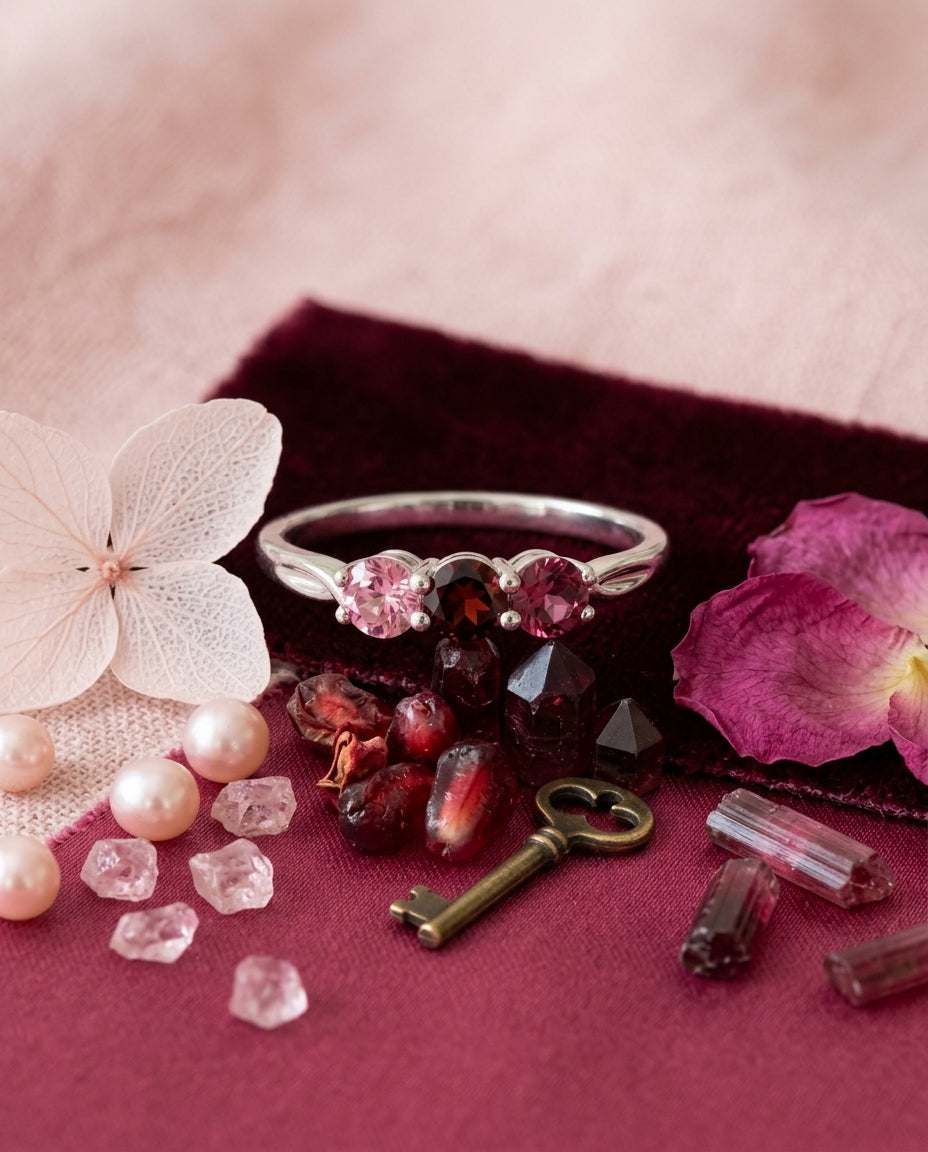
Same Month. Different People.
The color can repeat while the position keeps each story separate.
Choosing a Ring Architecture
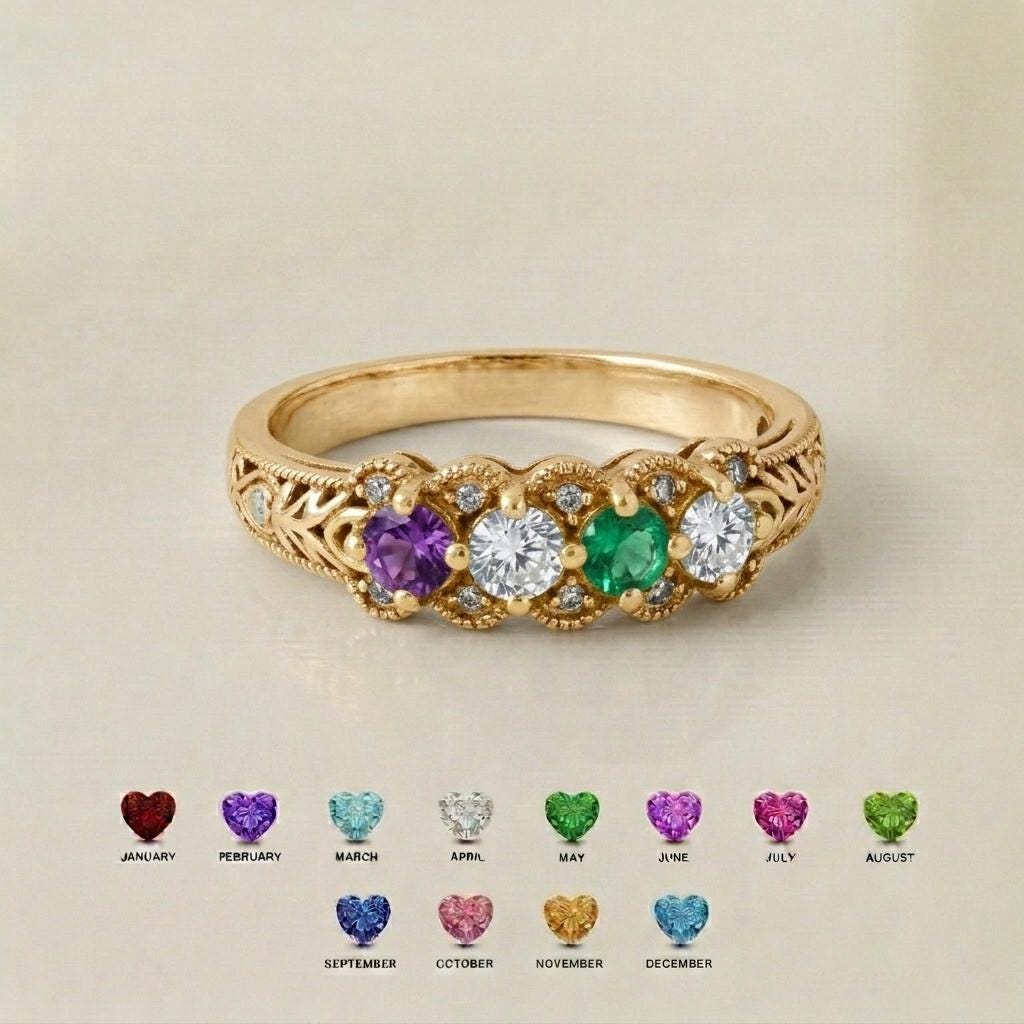
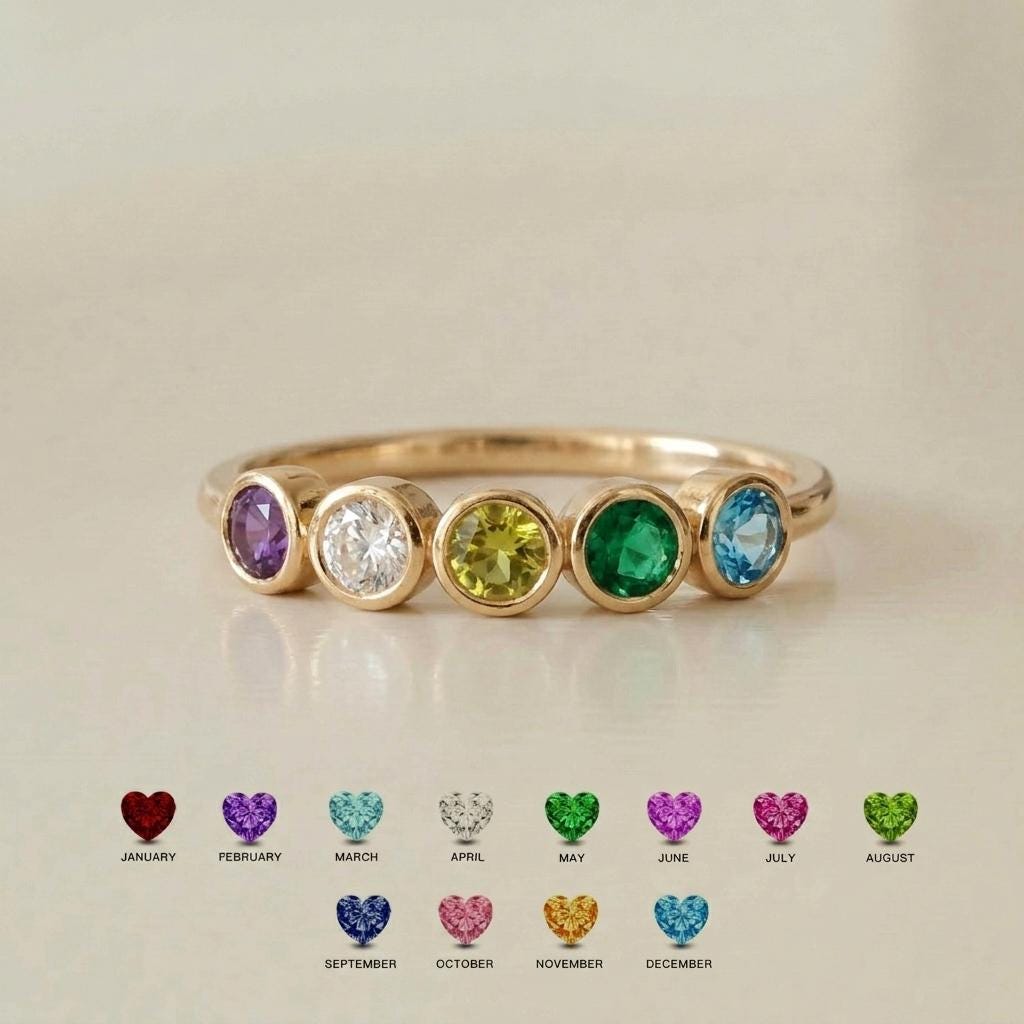
Different Designs Organize a Family Differently
Once your people and sequence are clear, choose a ring architecture that can actually hold that story. These active FarahBlush designs illustrate three different approaches.
Before You Personalize
A Five-Step Family Birthstone Map
List the people.
Decide who the ring represents before choosing colors.
Confirm the months.
Use the birth month guide if you need to check stone colors.
Choose one ordering rule.
Birth order, meaning first, or a documented color-flow sequence.
Match the Custom Guide.
Enter the colors in the exact position order required by the product.
Review the whole map.
Check every person, month, and position before checkout.
Carry the People You Love
Start With the Family. Then Choose the Ring.
Explore designs built for different stone counts, shapes, and family stories. Once you know who belongs in each position, personalization becomes much easier.