.fbj{–ivory:#fbf7f2;–cream:#f5eee6;–ink:#2f2925;–muted:#786d65;–line:#e8ddd2;–gold:#a98559;max-width:1120px;margin:auto;color:var(–ink);font-family:Georgia,’Times New Roman’,serif}.fbj *{box-sizing:border-box}.hero{display:grid;grid-template-columns:1fr 1fr;background:var(–ivory);border:1px solid var(–line);border-radius:22px;overflow:hidden}.hc{padding:76px 9%;display:flex;flex-direction:column;justify-content:center}.hero img{width:100%;height:100%;min-height:540px;object-fit:cover}.ey{font:700 12px Arial,sans-serif;letter-spacing:.18em;text-transform:uppercase;color:var(–gold)}.fbj h1{font-size:clamp(38px,5vw,62px);line-height:1.04;font-weight:400}.fbj h2{font-size:clamp(30px,3.5vw,46px);font-weight:400}.fbj h3{font-size:22px;font-weight:400}.fbj p{font-size:18px;line-height:1.78;color:#443c37}.lead{font-size:21px!important;color:var(–muted)!important}.sec{padding:76px 8%;border-left:1px solid var(–line);border-right:1px solid var(–line)}.symbols{display:grid;grid-template-columns:repeat(3,1fr);gap:18px;margin-top:30px}.symbol{border:1px solid var(–line);border-radius:18px;padding:28px;background:#fff;text-align:center}.big{font-size:36px;color:var(–gold)}.compare{display:grid;grid-template-columns:1fr 1fr;gap:24px;margin-top:30px}.product{border:1px solid var(–line);border-radius:18px;overflow:hidden;background:#fff}.product img{width:100%;aspect-ratio:1/1;object-fit:cover}.product div{padding:24px}.note{font:600 14px/1.55 Arial,sans-serif;color:var(–muted)}.related{display:grid;grid-template-columns:repeat(3,1fr);gap:18px}.rel{border:1px solid var(–line);border-radius:16px;padding:22px;text-decoration:none;color:inherit}.btn{display:inline-block;border:1px solid var(–ink);color:var(–ink)!important;text-decoration:none;padding:15px 24px;border-radius:999px;font:700 13px Arial,sans-serif}@media(max-width:760px){.hero,.compare{grid-template-columns:1fr}.hc,.sec{padding:48px 22px}.hero img{min-height:0;aspect-ratio:1/1}.symbols,.related{grid-template-columns:1fr}.fbj p{font-size:17px}}
FarahBlush Journal · Choosing the Symbol
A date answers “when.” A birthstone answers “which month or person symbolically.” A name answers “who.” Choosing between them is less about decoration and more about what the wearer wants the ring to bring back first.
Three Different Memory Markers
Who, When, or Symbol
Name
Direct identity. The person is readable in the jewelry.
Date
A specific day or moment becomes the focal marker.
Birthstone
A month or person is carried through symbolic color rather than text.
Date-Led vs Birthstone-Led
Two Products, Two Different Jobs

Choose a Date When…
The Moment Itself Is What You Want to See
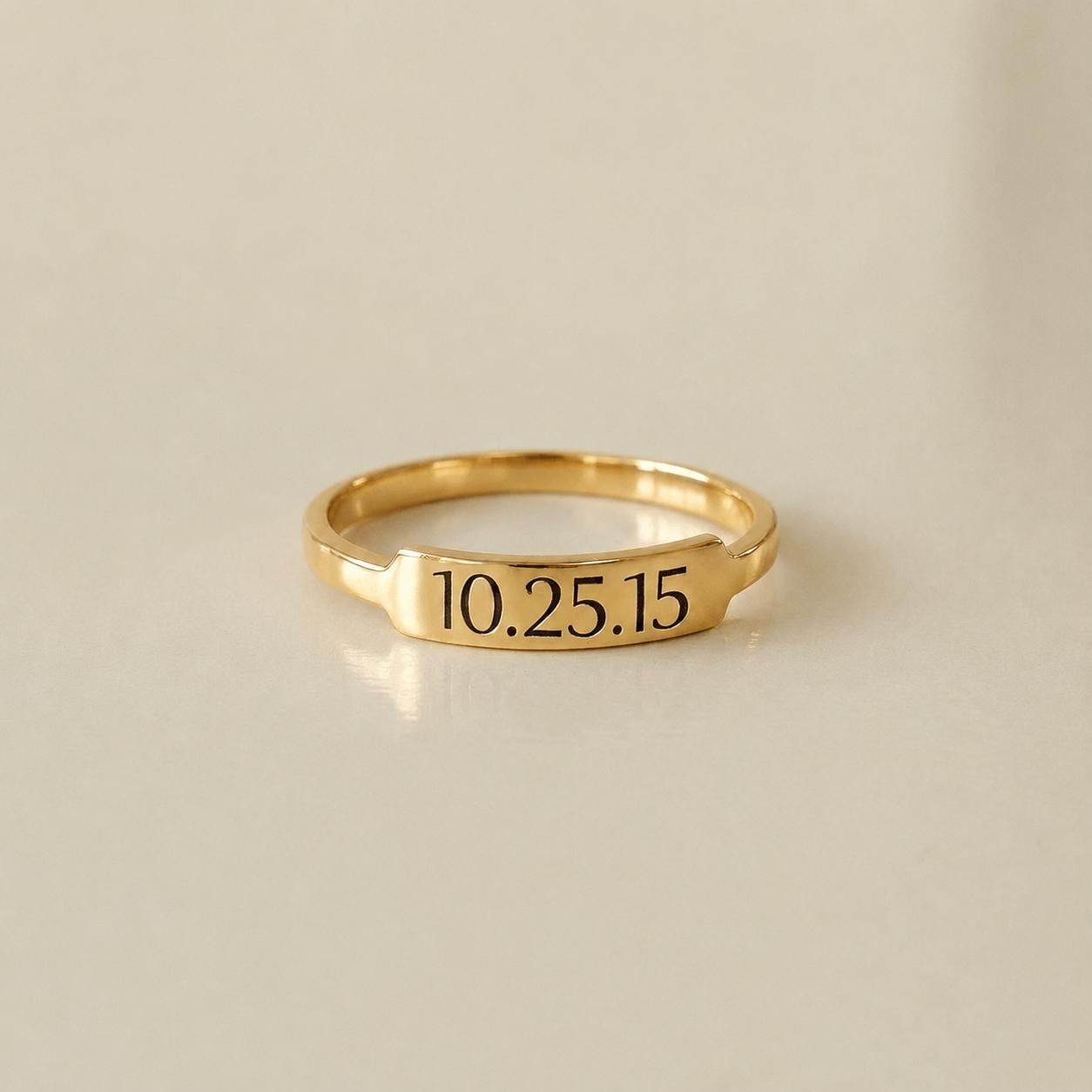
A date-led ring is appropriate when the day is the memory marker the wearer recognizes immediately. The jewelry can remain visually minimal because the number itself carries the meaning.
Use the exact date format supported by the product and proofread it carefully; number-only dates can be ambiguous across regional formats.
Choose a Birthstone When…
You Want the Meaning to Stay More Symbolic
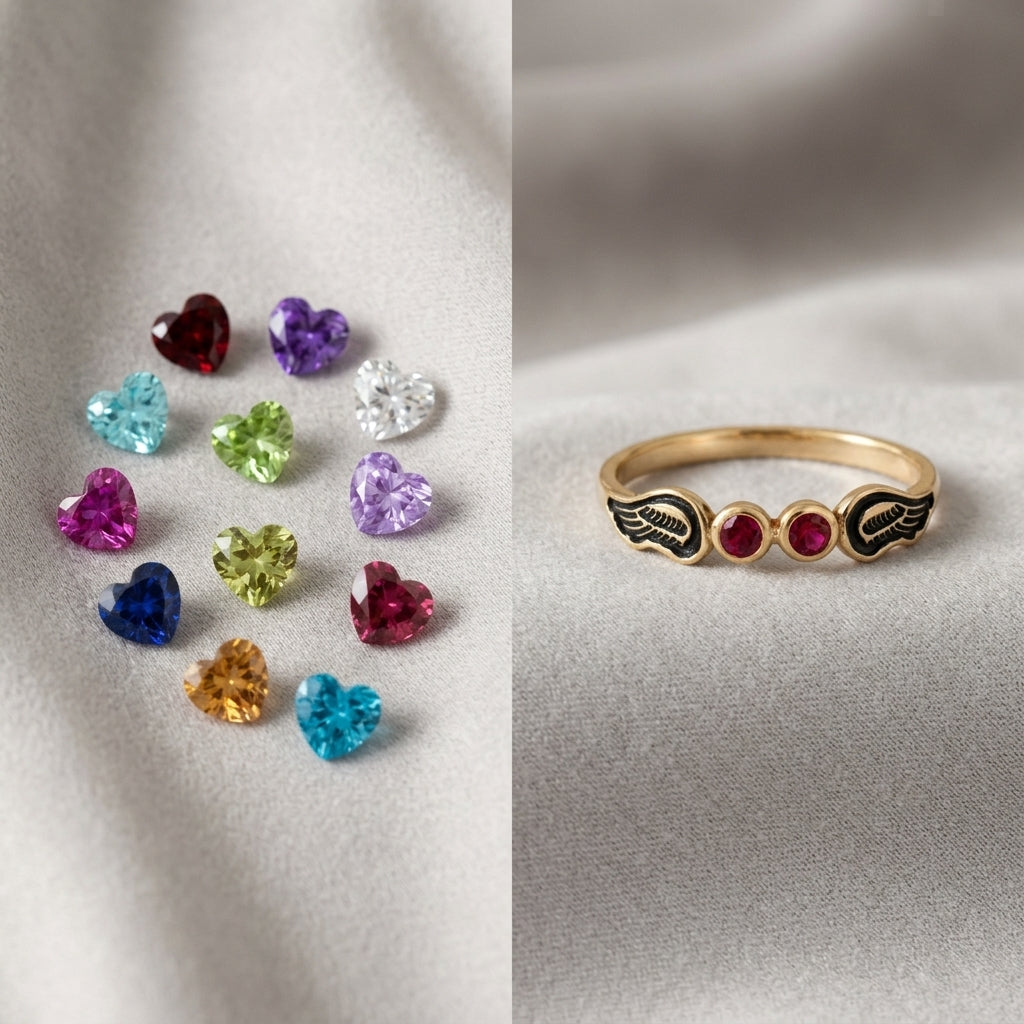
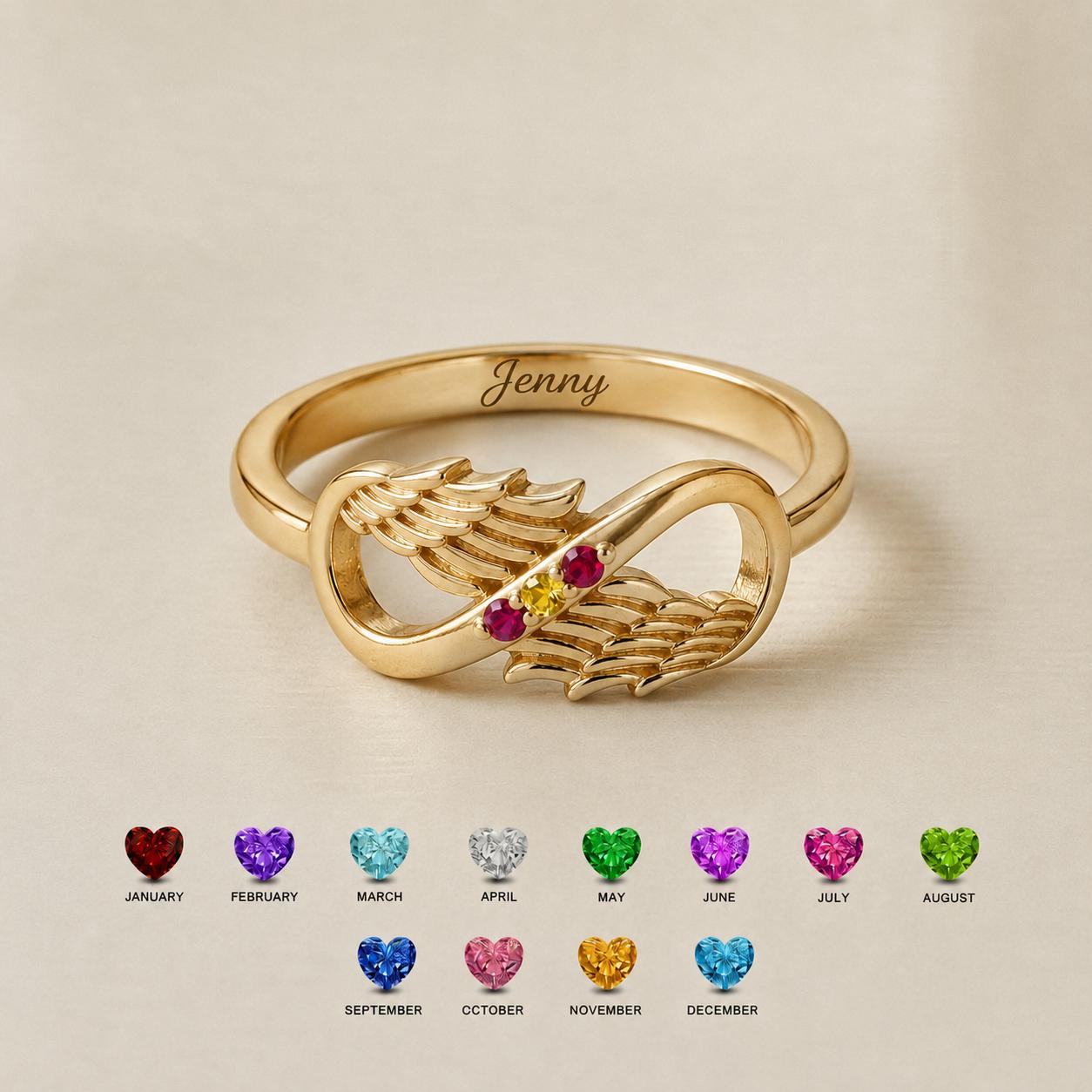
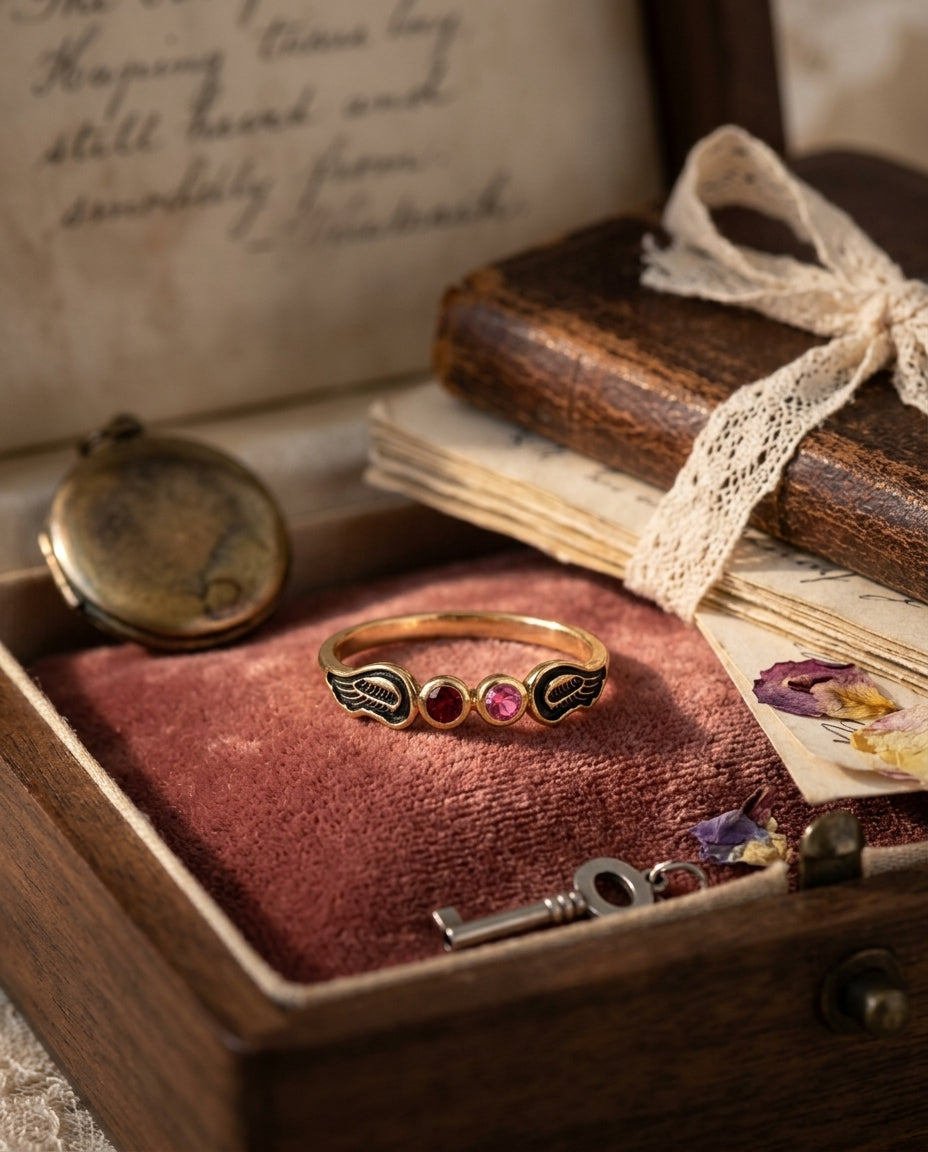
A birthstone can carry a person’s month without displaying a name or date publicly. In BRS090, the wearer can also choose a name/engraving; in BRS101, two separate stones can represent two positions.
If two people share the same month, the same color can be repeated because the positions—not unique colors—distinguish them.
Choose a Name When…
Identity Should Be Immediate
If the person’s name is the detail the wearer most wants visible, choose a product whose current personalization explicitly supports it. Do not assume a date-only ring can accept names or that a stone-only ring can accept text.
One Memory Marker at a Time
Choose What You Want the Ring to Say First
Who, when, or symbolic month can each lead a remembrance piece. The right architecture is the one built for that information.