.fbj{–ivory:#fbf7f2;–cream:#f5eee6;–paper:#fffdf9;–ink:#2f2925;–muted:#786d65;–line:#e8ddd2;–gold:#a98559;–blush:#f0e0dc;max-width:1120px;margin:0 auto;background:var(–paper);color:var(–ink);font-family:Georgia,’Times New Roman’,serif}.fbj *{box-sizing:border-box}.fbj .hero{display:grid;grid-template-columns:1.04fr .96fr;background:var(–ivory);border:1px solid var(–line);border-radius:22px;overflow:hidden}.fbj .heroCopy{padding:72px 9%;display:flex;flex-direction:column;justify-content:center}.fbj .hero img{width:100%;height:100%;min-height:520px;object-fit:cover}.fbj .eyebrow{font:700 12px/1.3 Arial,Helvetica,sans-serif;letter-spacing:.18em;text-transform:uppercase;color:var(–gold);margin:0 0 18px}.fbj h1{font-size:clamp(38px,5vw,64px);line-height:1.03;font-weight:400;margin:0 0 24px}.fbj h2{font-size:clamp(30px,3.5vw,47px);line-height:1.08;font-weight:400;margin:0 0 20px}.fbj h3{font-size:22px;line-height:1.22;font-weight:400;margin:0 0 10px}.fbj p{font-size:18px;line-height:1.75;color:#443c37;margin:0 0 18px}.fbj .lead{font-size:21px;line-height:1.65;color:var(–muted)}.fbj .section{padding:72px 7%;border-left:1px solid var(–line);border-right:1px solid var(–line)}.fbj .quote{padding:46px 8%;text-align:center;background:var(–cream);border-left:1px solid var(–line);border-right:1px solid var(–line)}.fbj .quote p{font-size:clamp(25px,3vw,38px);font-style:italic;line-height:1.35;color:var(–ink);margin:0}.fbj .scale{display:grid;grid-template-columns:repeat(4,1fr);gap:16px;margin-top:30px}.fbj .count{border:1px solid var(–line);border-radius:18px;background:#fff;padding:26px}.fbj .big{font:400 46px/1 Georgia;color:var(–gold);margin-bottom:15px}.fbj .products,.fbj .cards,.fbj .related{display:grid;grid-template-columns:repeat(3,1fr);gap:18px;margin-top:30px}.fbj .product{border:1px solid var(–line);border-radius:16px;overflow:hidden;background:#fff;text-decoration:none;color:inherit}.fbj .product img{width:100%;aspect-ratio:1/1;object-fit:cover}.fbj .product div,.fbj .card{padding:22px}.fbj .card{border:1px solid var(–line);border-radius:16px;background:#fff}.fbj .note{font:600 14px/1.55 Arial,Helvetica,sans-serif;color:var(–muted)}.fbj .button{display:inline-block;background:#2f2925;color:#fff!important;text-decoration:none;padding:16px 24px;border-radius:999px;font:700 13px/1 Arial,Helvetica,sans-serif;letter-spacing:.08em;text-transform:uppercase}.fbj .related a{display:block;text-decoration:none;color:inherit;border:1px solid var(–line);border-radius:14px;padding:22px;background:#fff}@media(max-width:760px){.fbj .hero{grid-template-columns:1fr}.fbj .heroCopy,.fbj .section{padding:48px 22px}.fbj .hero img{min-height:0;aspect-ratio:1/1}.fbj .scale{grid-template-columns:1fr 1fr}.fbj .products,.fbj .cards,.fbj .related{grid-template-columns:1fr}.fbj p{font-size:17px}}@media(max-width:420px){.fbj .scale{grid-template-columns:1fr}}
FarahBlush Journal · Stone Count
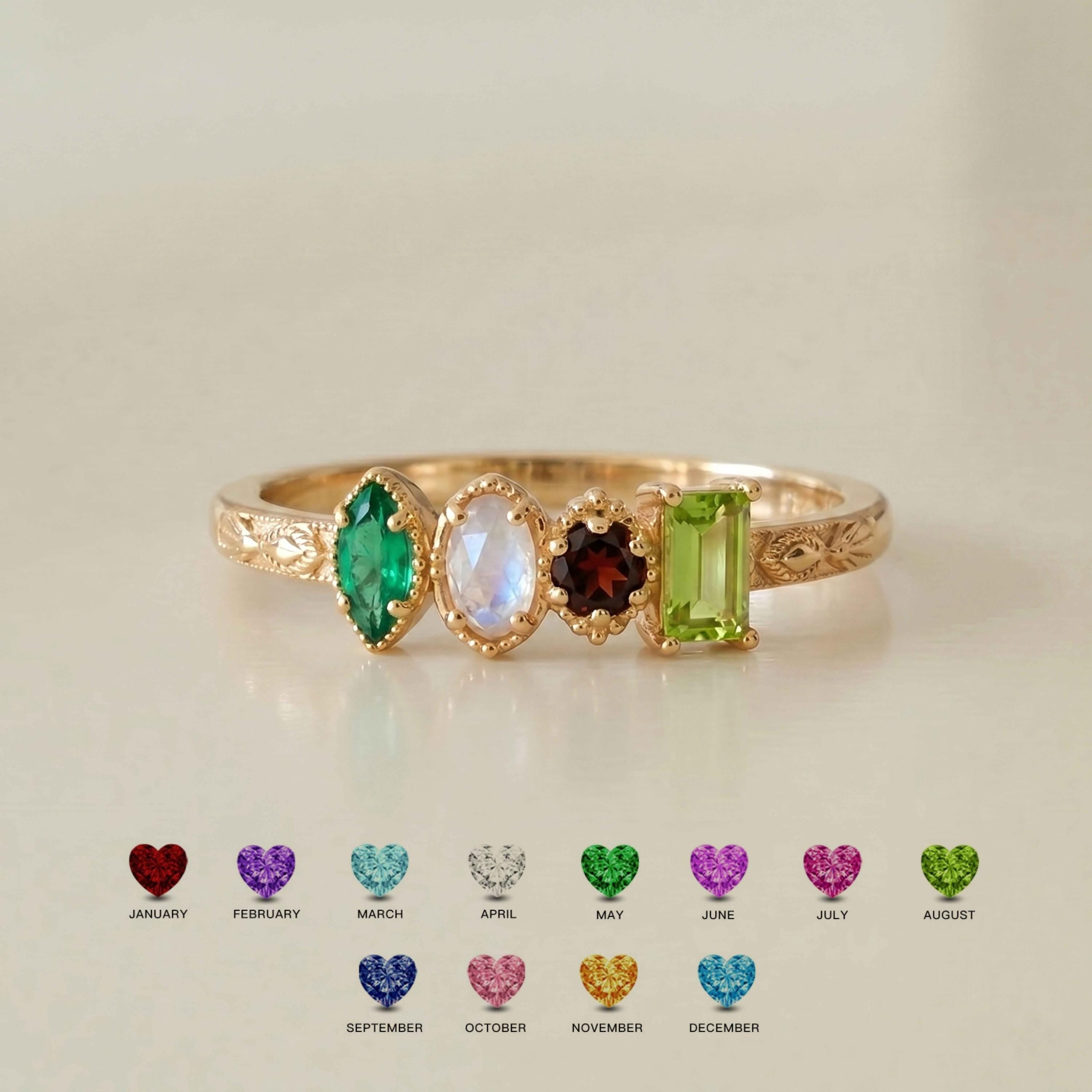
There is no single answer for every personalized ring. In current FarahBlush examples used in this guide, active designs span from one birthstone to eight depending on the architecture.
“Stone capacity belongs to the product—not to the keyword ‘family ring.’”
A Practical Range
One Through Eight Looks Very Different
One focal person
Useful for a child, the wearer, or one meaningful birth month.
A relationship pair
Mom + child, two grandchildren, partners, siblings, or another two-person story.
Compact family group
Enough positions for several children or grandchildren without needing the largest architecture.
Larger family map
Requires a ring explicitly built for the higher count.
Examples by Capacity
The Exact Product Determines the Limit
Eight Is Product-Specific
Some Current Designs Reach Eight; Others Stop Earlier or Use a Fixed Count
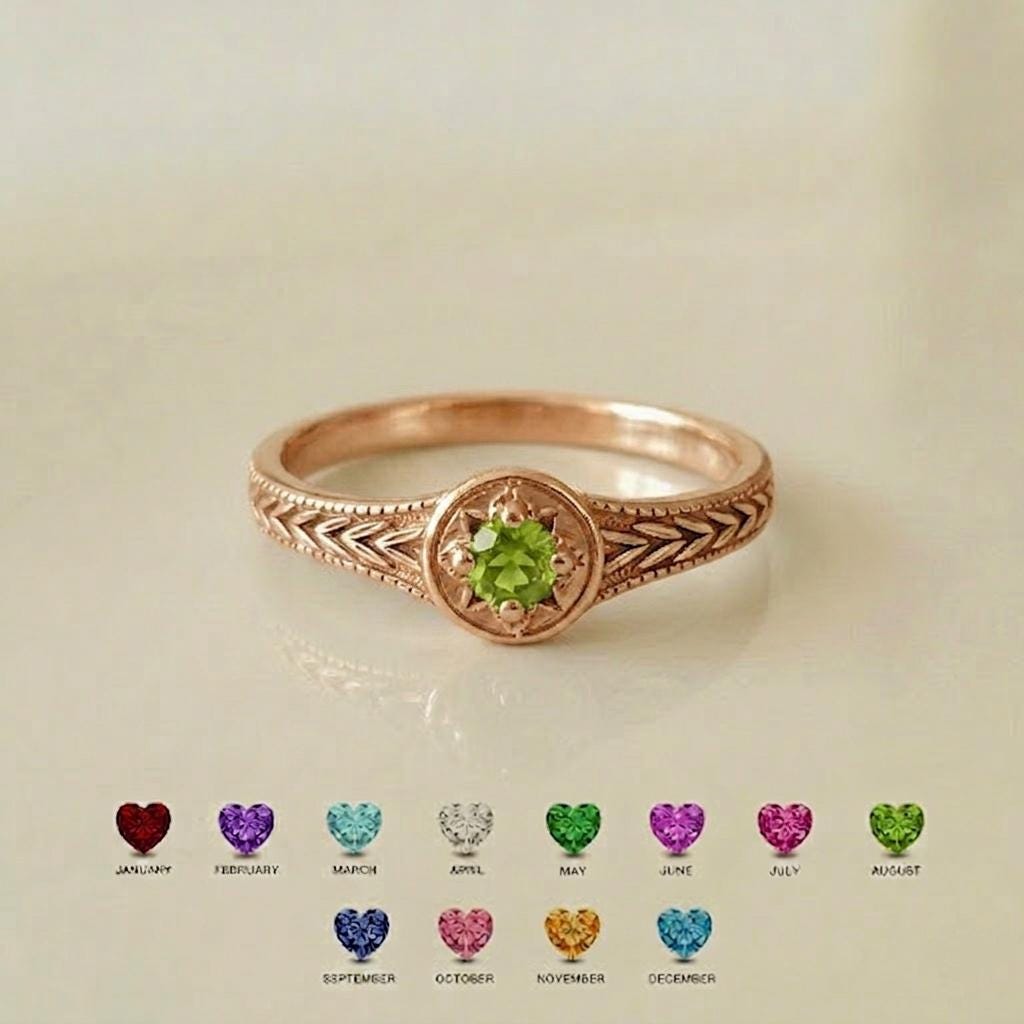
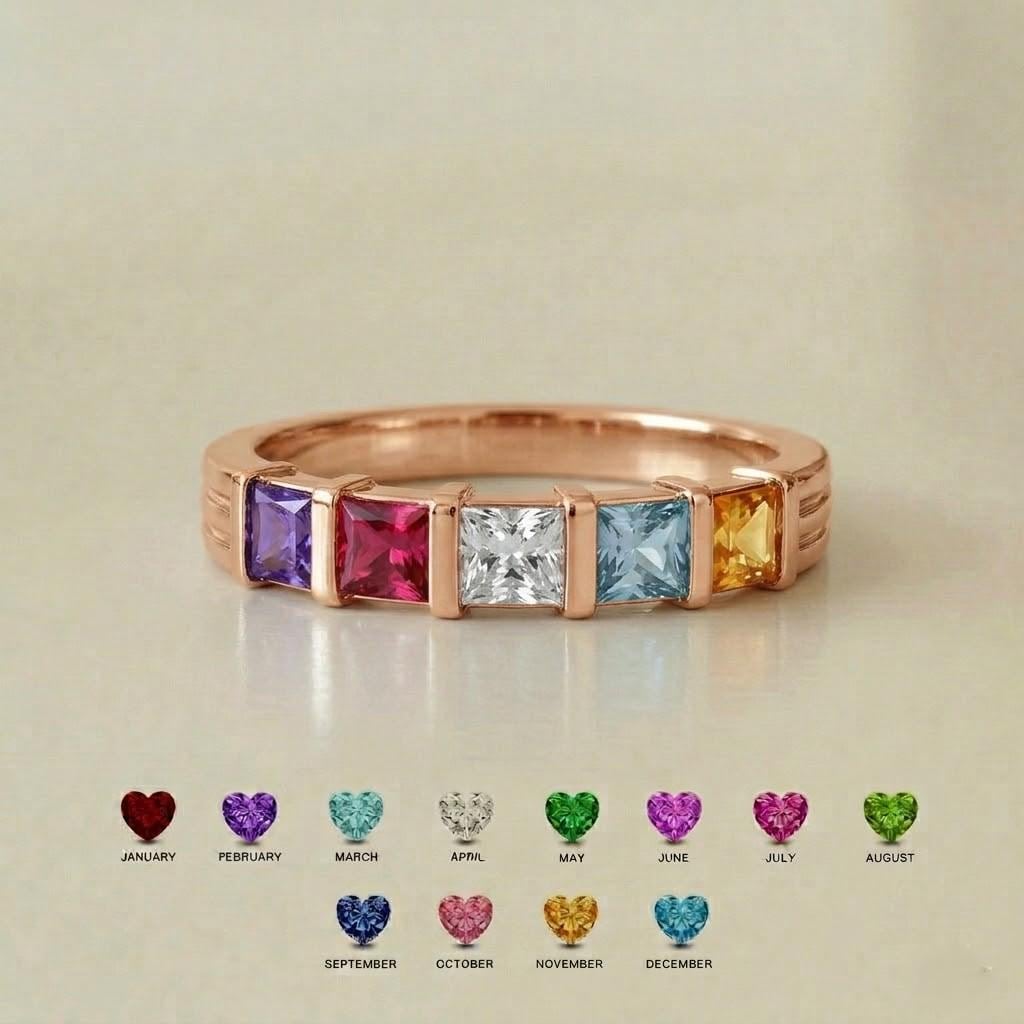
BRS015 currently supports 1–7 stones in a modern bar-setting band. BRS001 supports 1–7 names with matching stones. By contrast, BRS111 uses a fixed number of five birthstones.
FarahBlush also has active designs built for eight stones, including BRS078, BRS105, BRS058, and BRS052. See the 8 Stone Birthstone Rings collection for the current eight-position options.
Therefore, never copy the capacity of one ring onto another product. Check the active option list and personalization guide for the exact design being ordered.
What Changes as the Count Grows?
More Stones Change Both Meaning and Composition
More positions to map
Every person needs a stable Stone 1, Stone 2, and so on.
More colors can interact
A larger family palette may include strong contrasts or repeated birth months.
Architecture matters more
Rows, mixed shapes, channels, clusters, and stacks manage larger counts differently.
If Two People Share a Month
Stone Count Still Represents People, Not Unique Colors
A five-person family can still need five stone positions even if two people share the same birth month. Repeating one birthstone color does not collapse two people into one position.
Use What If Two Family Members Share the Same Birthstone? for the full shared-month method.
Choose the Count in Four Steps
Do Not Start With the Maximum
1. Count the people
Decide who the ring should represent now.
2. Choose the architecture
Find a product whose active options support that count.
3. Map every person
Write names and months in one stable order.
4. Review the exact variant
Confirm the selected stone quantity before entering colors.
Shop by Exact Capacity
Go Directly to the Number of Birthstones You Need
1 Stone · 2 Stones · 3 Stones · 4 Stones · 5 Stones · 6 Stones · 7 Stones · 8 Stones
Each collection is filtered by the exact active stone-count capability of the products inside it; always confirm the final personalization fields on the selected product page.
Plan a Specific Count
Move From Capacity to the Exact Family Size
One Person = One Intended Position
Choose the Ring Capacity From the Family, Not the Other Way Around
Current FarahBlush examples can reach eight stones, but the correct number is the number of people your chosen ring is built to hold.