.fbj{–ivory:#fbf7f2;–cream:#f5eee6;–paper:#fffdf9;–ink:#2f2925;–muted:#786d65;–line:#e8ddd2;–gold:#a98559;–blush:#f0e0dc;max-width:1120px;margin:0 auto;background:var(–paper);color:var(–ink);font-family:Georgia,’Times New Roman’,serif}.fbj *{box-sizing:border-box}.fbj .hero{display:grid;grid-template-columns:1.04fr .96fr;background:var(–ivory);border:1px solid var(–line);border-radius:22px;overflow:hidden}.fbj .heroCopy{padding:72px 9%;display:flex;flex-direction:column;justify-content:center}.fbj .hero img{width:100%;height:100%;min-height:520px;object-fit:cover}.fbj .eyebrow{font:700 12px/1.3 Arial,Helvetica,sans-serif;letter-spacing:.18em;text-transform:uppercase;color:var(–gold);margin:0 0 18px}.fbj h1{font-size:clamp(38px,5vw,64px);line-height:1.03;font-weight:400;margin:0 0 24px}.fbj h2{font-size:clamp(30px,3.5vw,47px);line-height:1.08;font-weight:400;margin:0 0 20px}.fbj h3{font-size:22px;line-height:1.22;font-weight:400;margin:0 0 10px}.fbj p{font-size:18px;line-height:1.75;color:#443c37;margin:0 0 18px}.fbj .lead{font-size:21px;line-height:1.65;color:var(–muted)}.fbj .section{padding:72px 7%;border-left:1px solid var(–line);border-right:1px solid var(–line)}.fbj .quote{padding:46px 8%;text-align:center;background:var(–cream);border-left:1px solid var(–line);border-right:1px solid var(–line)}.fbj .quote p{font-size:clamp(25px,3vw,38px);font-style:italic;line-height:1.35;color:var(–ink);margin:0}.fbj .matrix{display:grid;grid-template-columns:repeat(3,1fr);gap:18px;margin-top:30px}.fbj .cell{border:1px solid var(–line);border-radius:18px;background:#fff;padding:27px}.fbj .products,.fbj .cards,.fbj .related{display:grid;grid-template-columns:repeat(3,1fr);gap:18px;margin-top:30px}.fbj .product{border:1px solid var(–line);border-radius:16px;overflow:hidden;background:#fff;text-decoration:none;color:inherit}.fbj .product img{width:100%;aspect-ratio:1/1;object-fit:cover}.fbj .product div,.fbj .card{padding:22px}.fbj .card{border:1px solid var(–line);border-radius:16px;background:#fff}.fbj .note{font:600 14px/1.55 Arial,Helvetica,sans-serif;color:var(–muted)}.fbj .button{display:inline-block;background:#2f2925;color:#fff!important;text-decoration:none;padding:16px 24px;border-radius:999px;font:700 13px/1 Arial,Helvetica,sans-serif;letter-spacing:.08em;text-transform:uppercase}.fbj .related a{display:block;text-decoration:none;color:inherit;border:1px solid var(–line);border-radius:14px;padding:22px;background:#fff}@media(max-width:760px){.fbj .hero{grid-template-columns:1fr}.fbj .heroCopy,.fbj .section{padding:48px 22px}.fbj .hero img{min-height:0;aspect-ratio:1/1}.fbj .matrix,.fbj .products,.fbj .cards,.fbj .related{grid-template-columns:1fr}.fbj p{font-size:17px}}
FarahBlush Journal · Mom’s Birthstone Ring
The best mother’s ring starts before the jewelry: decide who Mom should see in the piece, then choose a ring architecture that gives those people the right number of places.
“Choose the family story first. Stone count, names, shapes, and finish become easier after that.”
The Definition
What Is a Mother’s Ring?
A mother’s ring is personalized family jewelry that represents the wearer’s children or other loved ones through birthstones, names, engraving, or a combination of those details. There is no single required format: some mother’s rings represent children only, while others include Mom or several generations.
This complete guide covers the broad mother’s-ring decision: who the ring represents, how many positions it needs, and whether names or birthstones should lead. If you already know the ring should contain exactly two stones, use the 2 Stone Mother’s Ring Guide instead.
Start Here
What Should the Ring Represent?
One child
A single birthstone can keep the piece focused and simple.
Mom + one child
Two personalized positions turn the ring into a relationship piece.
Several children
Choose a product whose active stone count matches the family.
Names + stones
Use this when every child should be explicitly identifiable.
Children + grandchildren
Treat everyone as one person-to-position map rather than separate generations.
A private family symbol
Stone-only personalization can keep the meaning less obvious to everyone else.
Choose by Family Count
Current FarahBlush Designs Span Different Stone Capacities
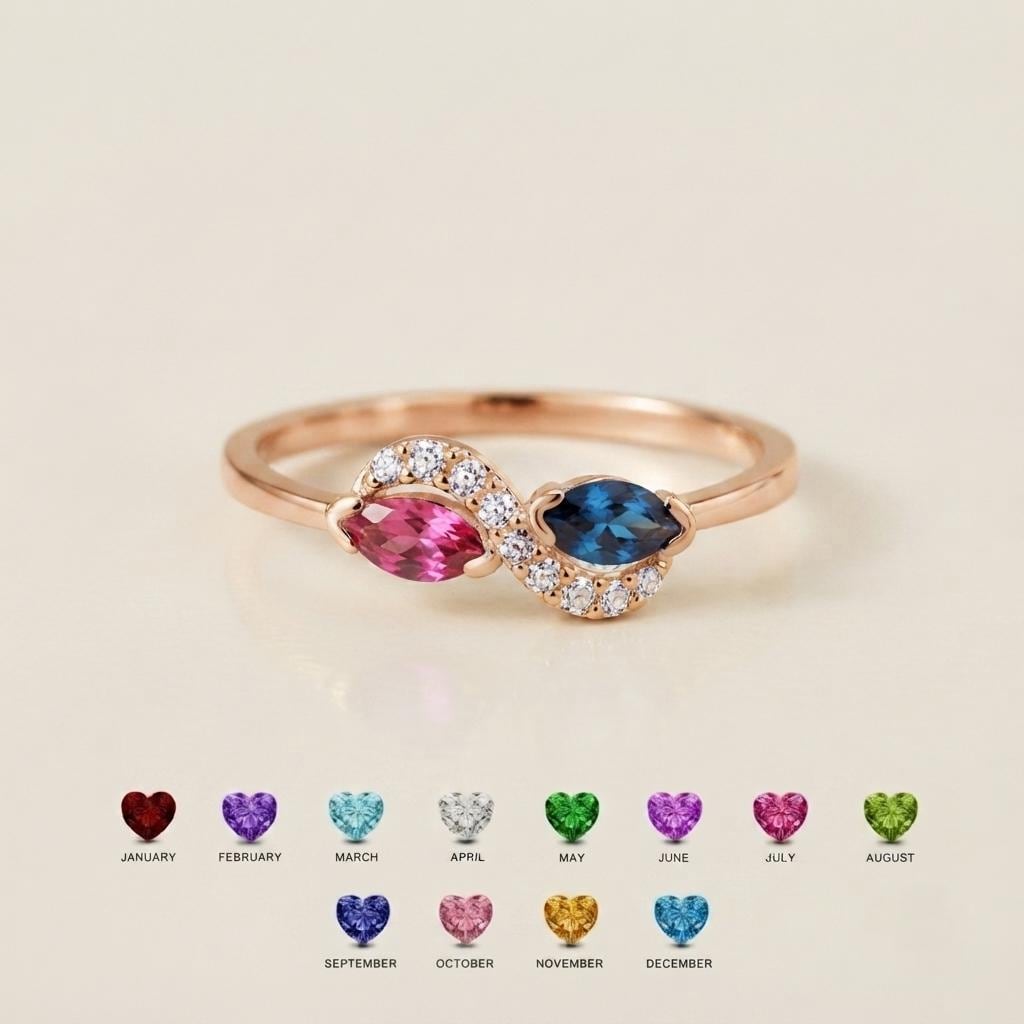
Exactly Two
BRS119
Two marquise birthstones for a two-person story.
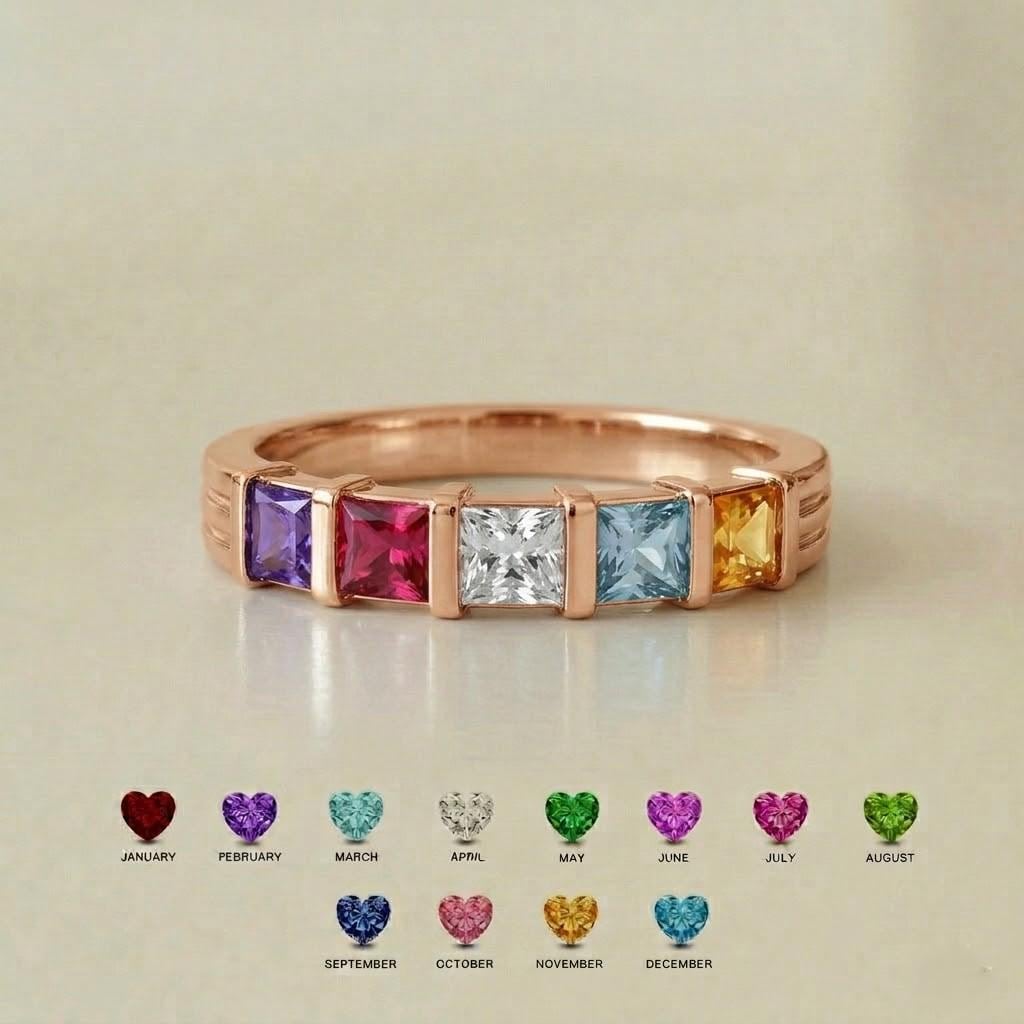
Two to Six
BRS108
Square-cut stones in a low-profile channel-inspired layout.
Two to Seven
BRS005
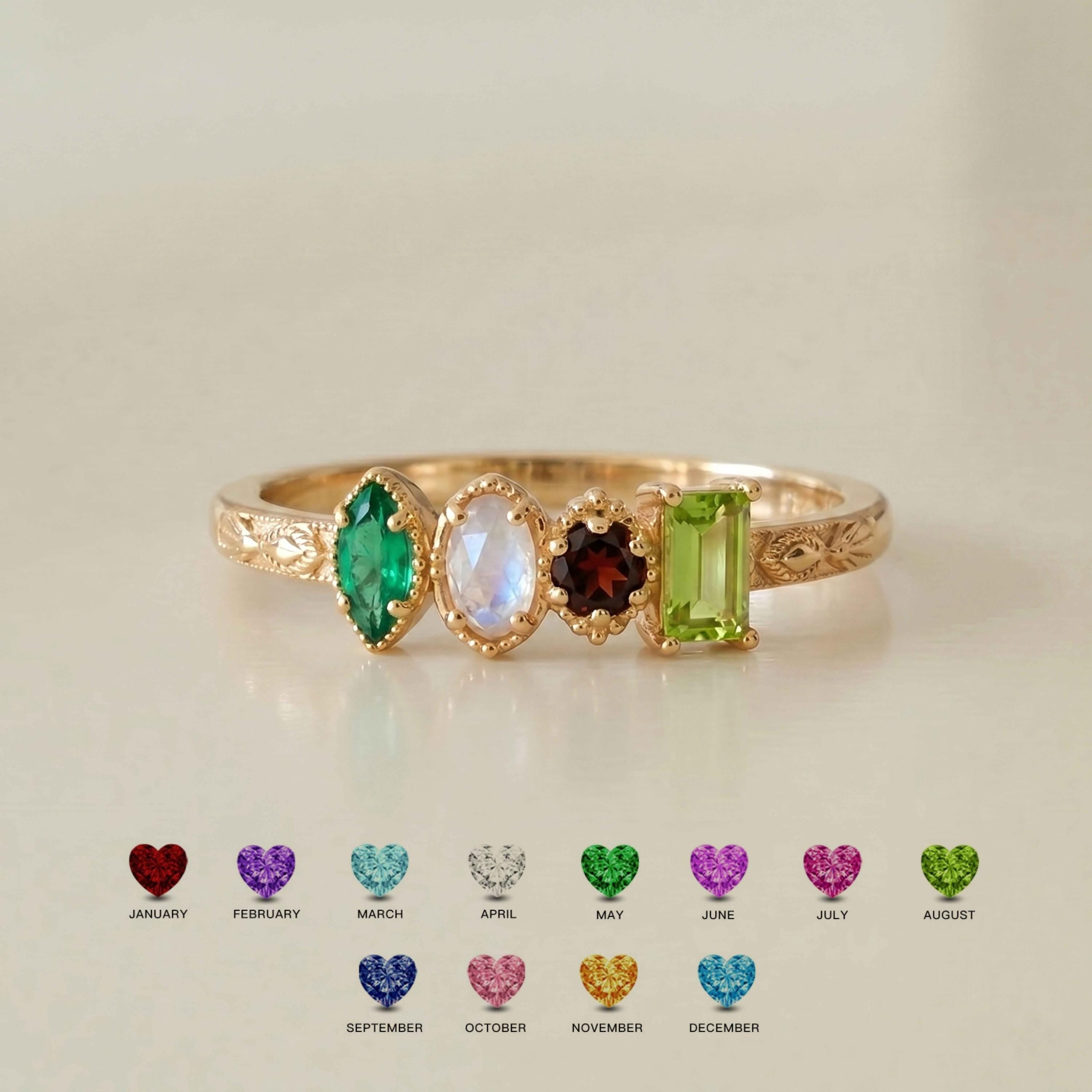
Mixed shapes let larger family counts remain visually varied.
For a detailed count decision, use Mother’s Birthstone Rings: How Many Stones Should You Choose?.
Names or Stones?
Decide How Explicit the Family Story Should Be
A birthstone-only ring lets Mom privately know who each color represents. A name + birthstone ring makes the identity visible. Neither is inherently more meaningful; they communicate differently.
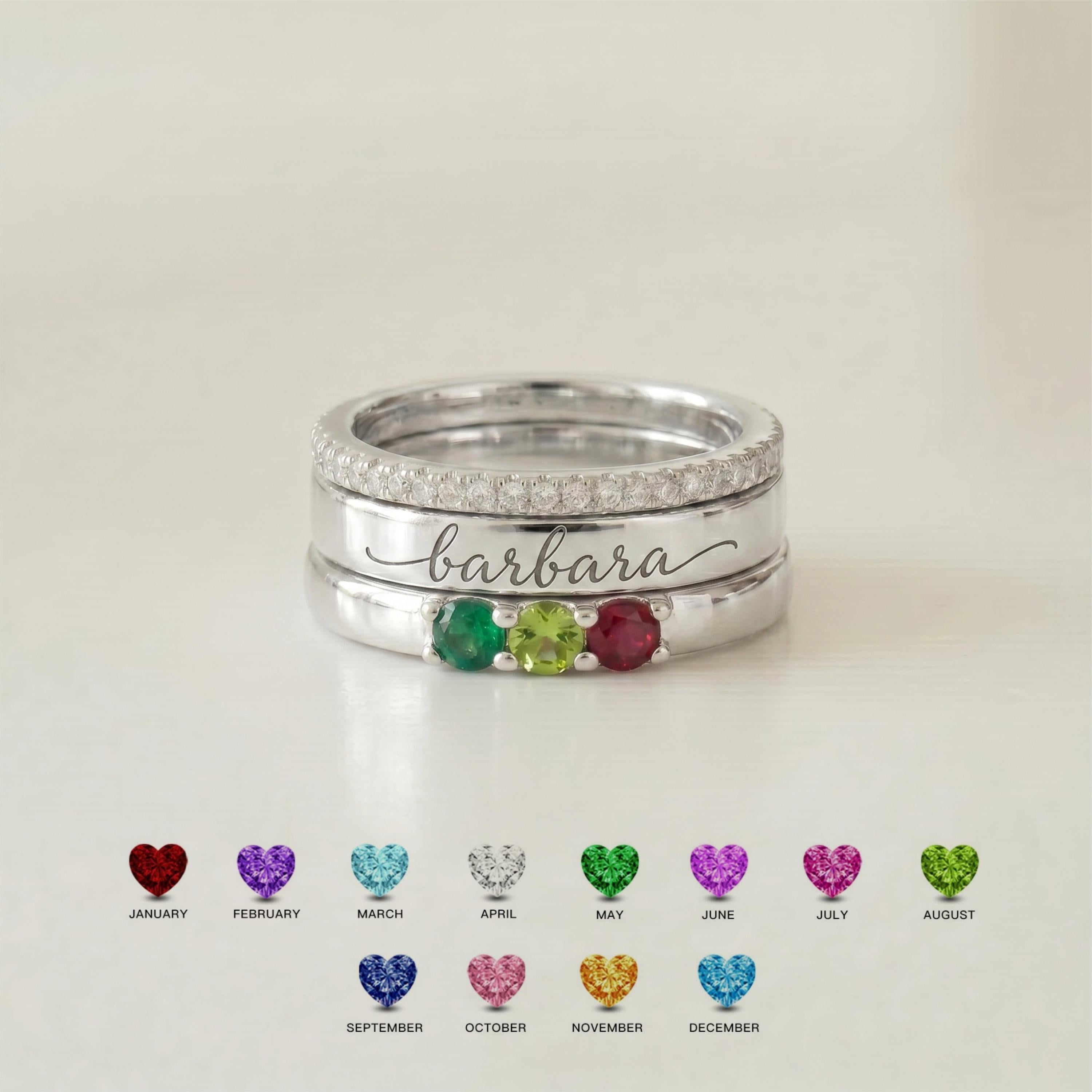
Names + Stones
BRS001 · 1–7 People
One name paired with each selected birthstone.
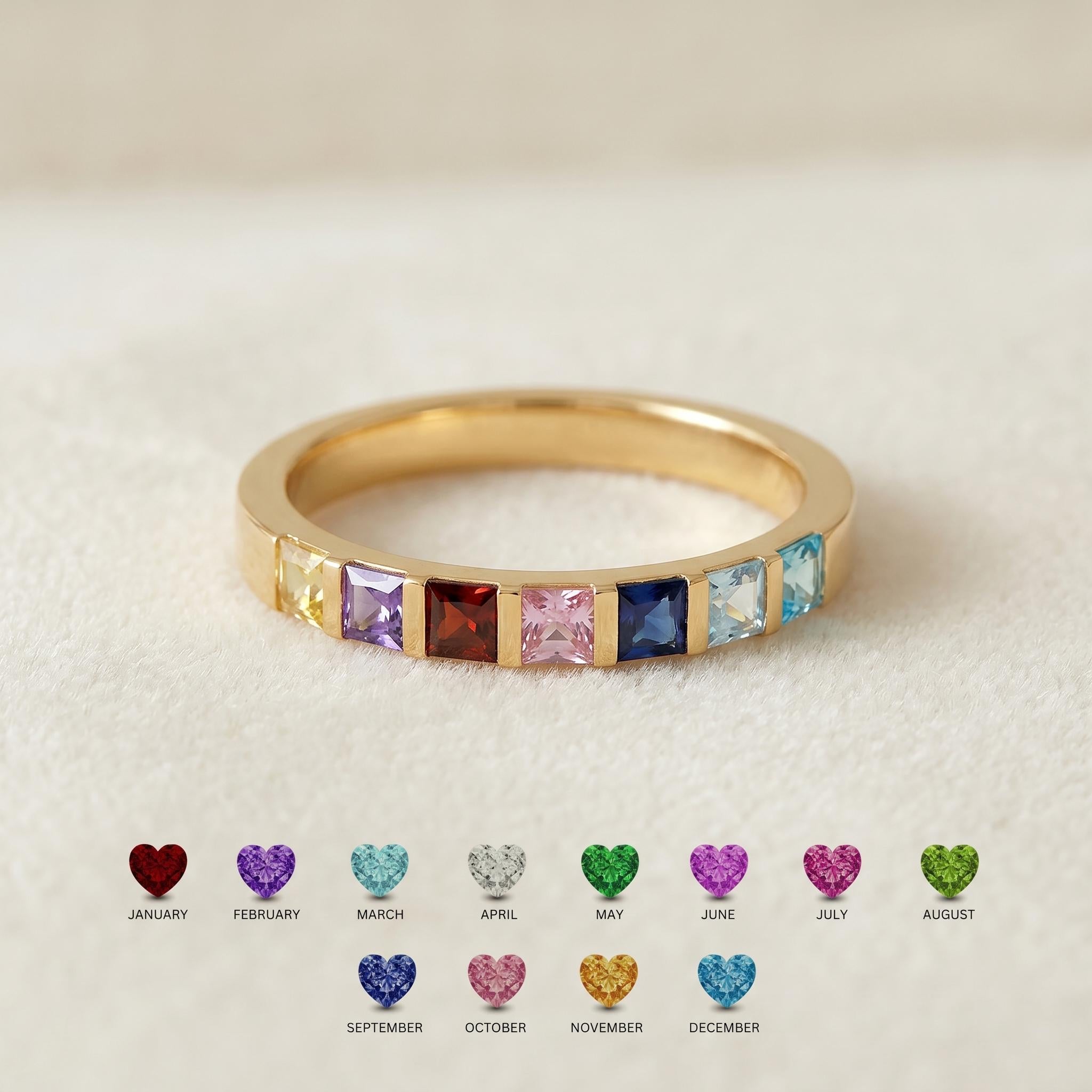
Stones Only
BRS015 · 1–7 Stones
A clean bar-setting band that can be worn alone or stacked.
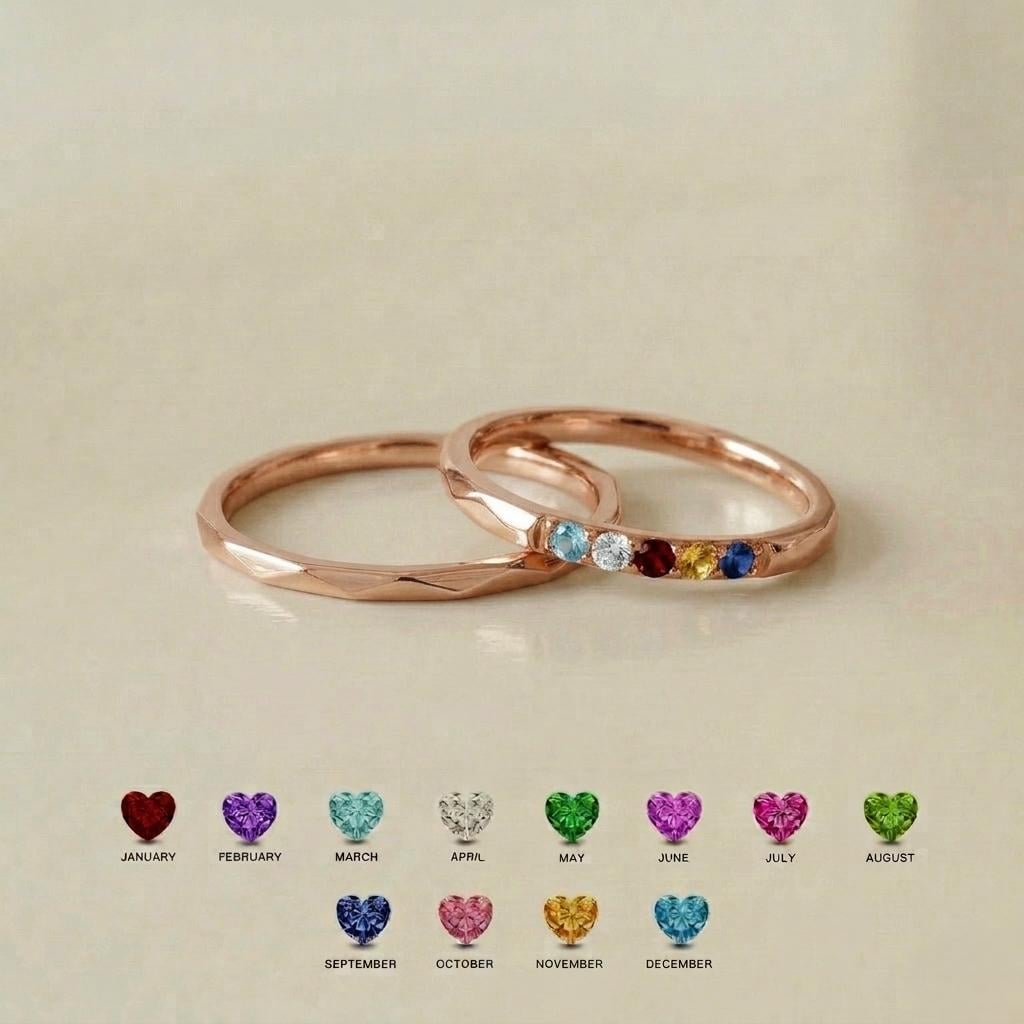
Fixed Five-Stone Set
BRS111
A two-ring set with one plain band and one band holding exactly five birthstones.
For the deeper identity question, compare Name Ring vs Birthstone Ring vs Both.
Choose the Visual Architecture
Shape, Setting, and Layout Change the Feeling More Than the Keyword “Mother’s Ring”
Mixed-shape
Useful when you want each stone to have a distinct visual presence.
Minimalist band
Keeps the profile simple and the family colors organized in a line.
Low-profile channel style
Keeps several stones visually contained across the band.
Name + stone
Adds explicit identity beside symbolic color.
Stacking set
Separates the family story across more than one band.
Heart / infinity / floral
Adds a relationship or nature motif to the personalization.
Use the Birthstone Shape Guide, Heart Birthstone Ring Guide, and Flower & Nature-Inspired Family Rings when the style decision needs more detail.
Order and Shared Months
Every Person Still Needs a Stable Position
Once the ring is chosen, write each person and birth month in the intended order. If two children share the same birth month, repeat the correct stone color rather than changing one for visual variety.
For ordering systems, use How to Arrange Birthstones in a Family Ring. For shared months, use What If Two Family Members Share the Same Birthstone?.
Finish
Choose Gold, Silver, or Rose Gold From What Mom Already Wears
Instead of using a generic rule, look at her everyday jewelry. The metal she already reaches for is the strongest clue. Many current FarahBlush family-ring examples in this guide offer Gold, Silver, and Rose Gold options, but always verify the exact product.
The full comparison is in Gold vs Silver vs Rose Gold for a Birthstone Ring.
Choose the Gifting Situation
Move From the Complete Mom Guide to the Exact Reason You Are Giving the Ring
Before Checkout
The Mother’s Ring Checklist
1. Who belongs in it?
Mom, children, grandchildren, or another family map.
2. How many positions?
Match the chosen product’s active personalization capacity.
3. Names or symbolism?
Decide whether the people should be visible or privately represented.
4. Which architecture?
Choose mixed shape, band, low profile, stack, or motif based on her style.
5. Which order?
Keep every person tied to the correct field position.
6. Which finish and size?
Use Mom’s actual jewelry preferences and ring size.
Carry the People You Love
Build the Mother’s Ring Around Her Real Family Story
Start with the people. Then choose the stone count, names, architecture, order, and finish that let Mom recognize them clearly.